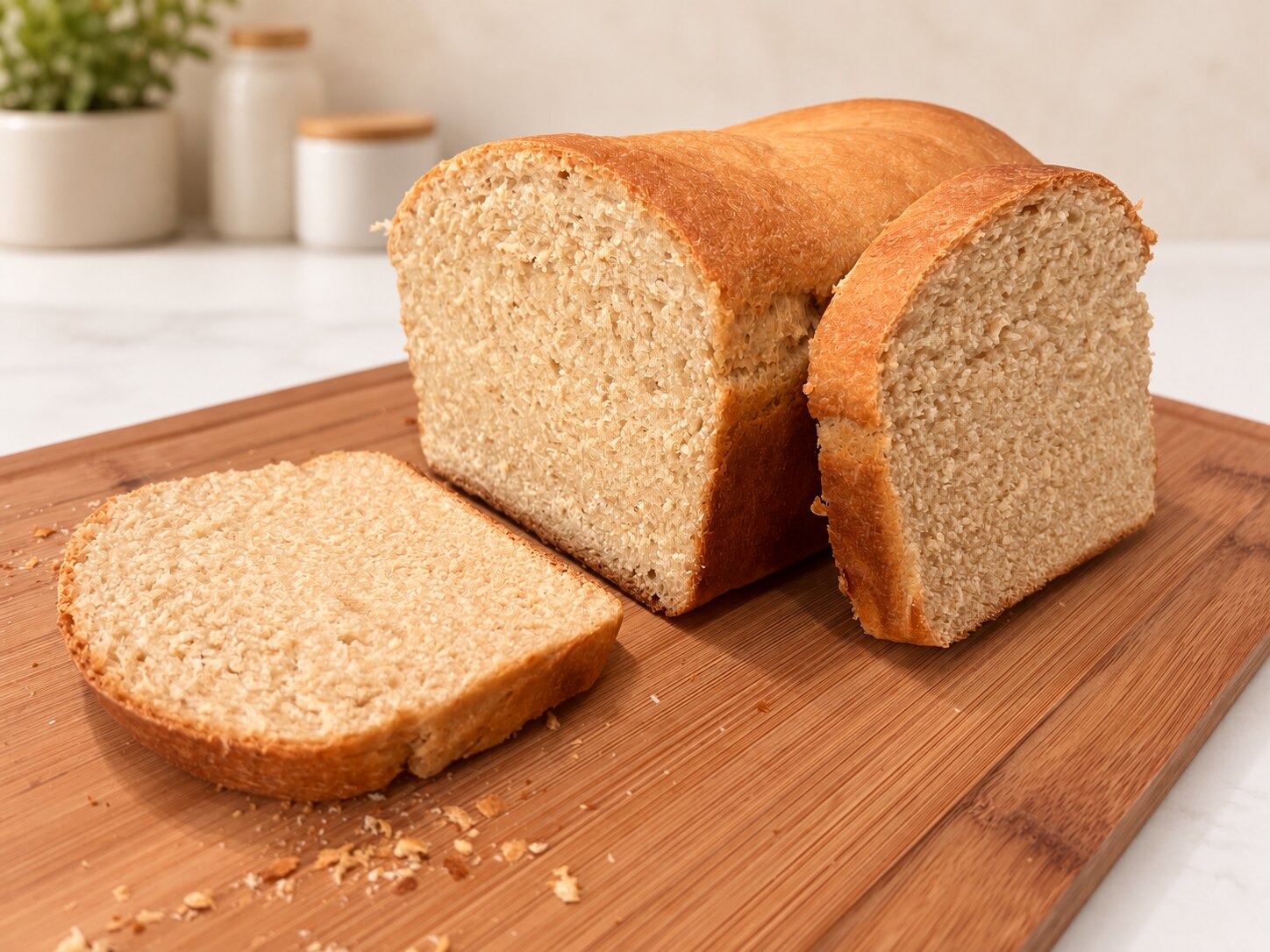
Fresh milled flour is flour made at home by grinding whole wheat berries—the whole, unprocessed kernels of wheat—just before baking.
The entire wheat berry goes into the flour. It can absorb more liquid and feel different in your hands, so begin with a recipe written for fresh milled flour.
Ready to bake?
Fresh Milled Sandwich Loaf
This soft, tender sandwich loaf is made with 100% freshly milled hard white wheat flour. Orange juice helps mellow the whole wheat flavor and keeps the crumb tender, you won’t taste it in the finished bread.
Use this as a starting point, not a rulebook. Blending grains is part of the fun.
The simple process
Wheat berries → flour → bread
The first time you mill wheat can feel like a big step. It is really just four repeatable steps.
01: Weigh: Measure the wheat berries your recipe needs.
02: Set up: Follow your mill’s instructions and choose a fine grind.
03: Mill: Grind the berries into fresh flour.
04: Bake: Use the flour in your recipe right away.
Before you bake
Fresh milled flour does not behave like white flour
It may absorb more water, need a rest before mixing, and take longer to develop gluten. Bran can affect structure, fermentation can move quickly, and every grain has a personality.
After your first loaf
Choose your next path
There is no single right way to keep learning. Follow the path that sounds most delicious today.
Dense, sticky, flat, or torn dough is information—not failure. Look at the whole process and change one variable at a time.
Why is my fresh milled bread dense?
Dense bread can come from dough that is too dry, not enough kneading, or a rise that was too short or too long. Look at the whole process rather than changing everything at once.
Next step: Choose the most likely cause and make one adjustment on your next loaf.
Some stickiness is normal with fresh milled dough. A short rest and enough kneading can help; dough that feels like batter and cannot hold its shape needs a closer look.
Next step: Before adding flour, check your ingredient weights, grain choice, rest time, and kneading.
Check that your yeast is still good. A cool kitchen slows the rise, and dough that is too stiff can struggle to expand; sometimes it simply needs more time.
Next step: If the yeast is active, watch the dough and follow your recipe’s rise cues rather than only its timer.
Watch how much the dough has grown and follow the first-rise cues in your particular recipe. Warm dough rises faster and cool dough rises more slowly; letting it rise too far can weaken it.
Next step: Check your recipe’s first-rise target and check the dough regularly as it approaches that stage.
Yes, fresh milled dough can be kneaded by hand or with a stand mixer, depending on the recipe. Look for dough that becomes smoother, stretchier, and stronger, rather than relying only on a number of minutes.
Next step: Follow your recipe and stop the mixer occasionally to check how the dough feels and stretches.
Hi, I’m Eleen. Fresh Milled Breads grew from baking for my family, learning to trust real ingredients, and wanting to share the joy of a warm loaf made slowly and intentionally.